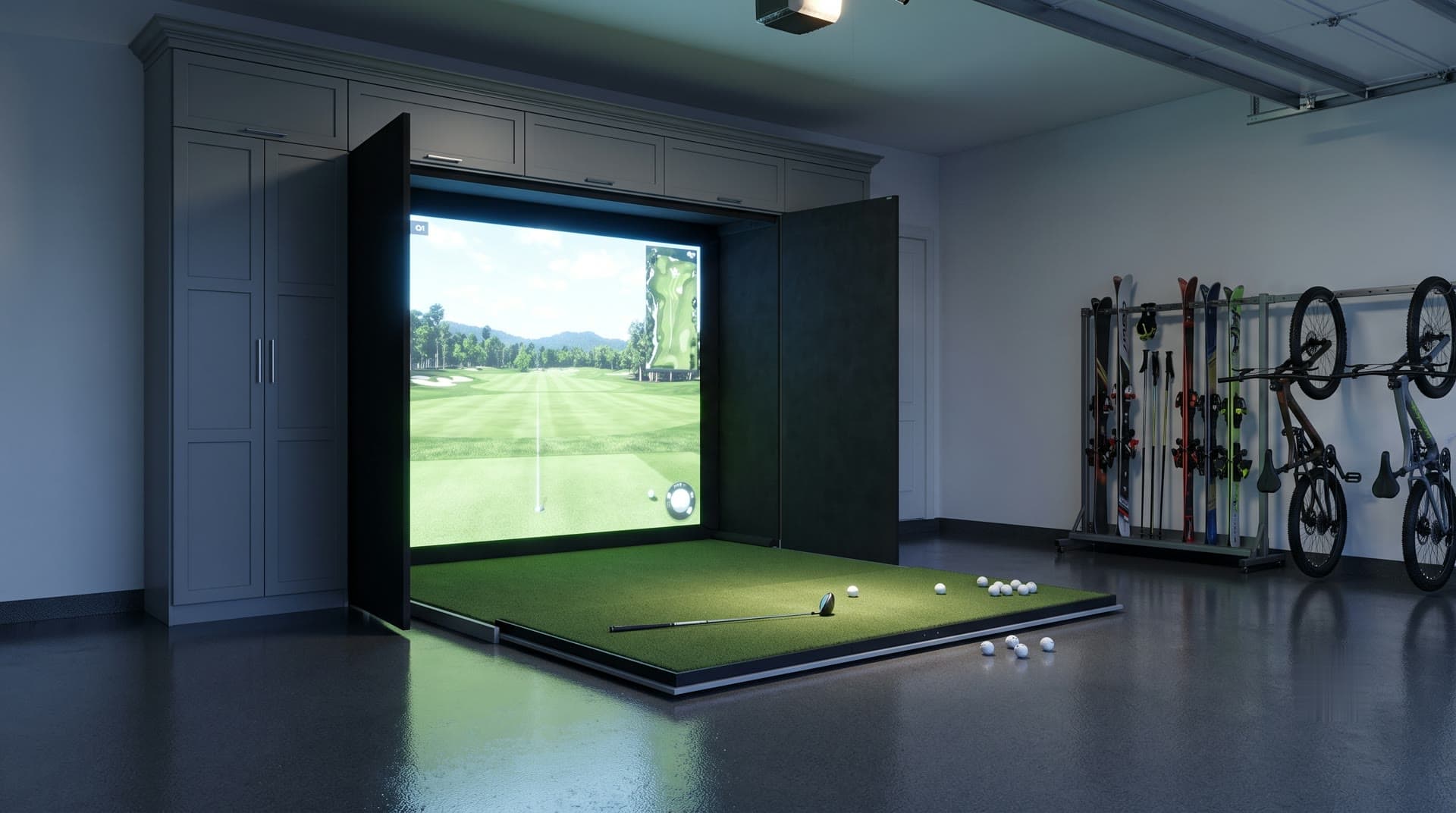
Why garages work well for simulators
A two-car garage often has the width and depth a full bay needs, a concrete floor that takes a hitting mat well, and space the house is not using for anything else. In much of New England it is also the only room big enough. The challenges are the ceiling, the door and the weather.
What cold does to a golf simulator
Electronics
Every projector, computer and launch monitor lists an operating temperature range. The minimum is commonly around 32 to 41 degrees Fahrenheit. A garage that sits in the teens in January is well outside that. Equipment may refuse to start, run poorly or wear out sooner. Check the spec sheet for each piece you are considering.
Golf balls
Cold balls are firmer and come off the club slower, so they read shorter on the launch monitor. Keep balls in the house or in a warm bin and bring them out for the session.
Screen, mat and enclosure
Impact screens, netting and turf get stiffer in the cold. A stiff screen is louder and less forgiving, and screen tension shifts as the temperature swings.
Comfort
A cold room is not much fun to swing in. Muscles are tight and the session gets cut short. A bay you actually use in winter needs to be comfortable.
Condensation and humidity
Condensation is the bigger risk. When warm, moist air meets a surface colder than its dew point, water forms on it. In a garage that happens two ways.
- Winter warm-up. You turn on a heater in a frozen garage. The air warms quickly, but the projector, lenses and circuit boards are still cold, and moisture settles on them.
- Summer humidity. New England summers are humid. Garages are rarely sealed or cooled, so moisture sits in the air and on the cool concrete slab, and screens and turf can grow mildew.
The answer for both is the same: keep conditions steady. Hold a minimum temperature through the winter instead of heating from cold for each session, and control humidity in summer. The EPA suggests keeping indoor humidity between 30 and 50 percent, which is a good target for the bay as well.
Ways to heat and condition the garage
| Option | What it does | Things to know |
|---|---|---|
| Ductless mini-split | Heats, cools and dehumidifies | Cold-climate models are built for New England winters. Needs an outdoor unit and a dedicated circuit. |
| Electric garage heater | Heat only | Simple to install. Usually needs a dedicated 240 volt circuit. Pair with a dehumidifier for summer. |
| Vented gas or propane unit heater | Heat only | Strong heat output. Must be vented and installed to code. Add a carbon monoxide detector. |
| Dehumidifier | Removes moisture | Useful year round in damp garages. Drain it to a floor drain or outside so it runs unattended. |
Never run an unvented fuel heater in a closed garage. Heat also only sticks if the space holds it, so look at the next section before you size anything.
Insulation and sealing
- The garage door. It is the largest uninsulated surface in most garages. An insulated door or an insulation kit plus new weatherstripping makes a big difference.
- Walls and ceiling. Many attached garages have insulation only on the wall shared with the house. Insulating the outside walls and the ceiling keeps heat in and humidity steadier.
- The slab. A concrete floor stays cold. A padded turf system or a raised hitting platform keeps your feet warm and the mat off the cold, damp slab.
Garage layout problems to plan for
The door opener and tracks
A ceiling-mounted opener and the door tracks often sit right where the swing or the projector needs to be. A wall-mounted opener beside the door frees the ceiling, and high-lift track can raise the door closer to the roof line.
Ceiling height
Garage ceilings in newer homes are usually 9 to 10 feet, and older garages can be lower. Ten feet fits a full swing for most adults, and nine feet can work with a compact setup. Our room size guide explains how to test your swing.
Light
Windows in the door and walls wash out the projector image. Shades or a darker screen position help.
Power
A simulator, a projector, a computer and a heater on one old garage circuit is asking for trouble. Plan dedicated circuits. Garage outlets also need GFCI protection under the electrical code.
Cars
If the cars still park inside, exhaust, salt and slush come in with them. A Murphy or retractable simulator folds the screen and enclosure away, and we place the electronics where they stay clean and dry.
If you will not heat the garage
Some owners play mostly spring through fall. That can work with a few habits.
- Use a portable floor launch monitor and bring it inside between sessions, along with the computer.
- When you bring cold gear back inside, leave it in its case until it reaches room temperature.
- Run a dehumidifier through the summer.
- Cover the projector and screen when not in use, and check them for moisture before you start.
It costs less up front, but you give up the winter, which is the whole reason most New Englanders want a simulator. Our cost guide shows where heating and insulation fit in the budget.
